Investment
Investing in Kenya's Affordable Housing Projects: What You Need to Know
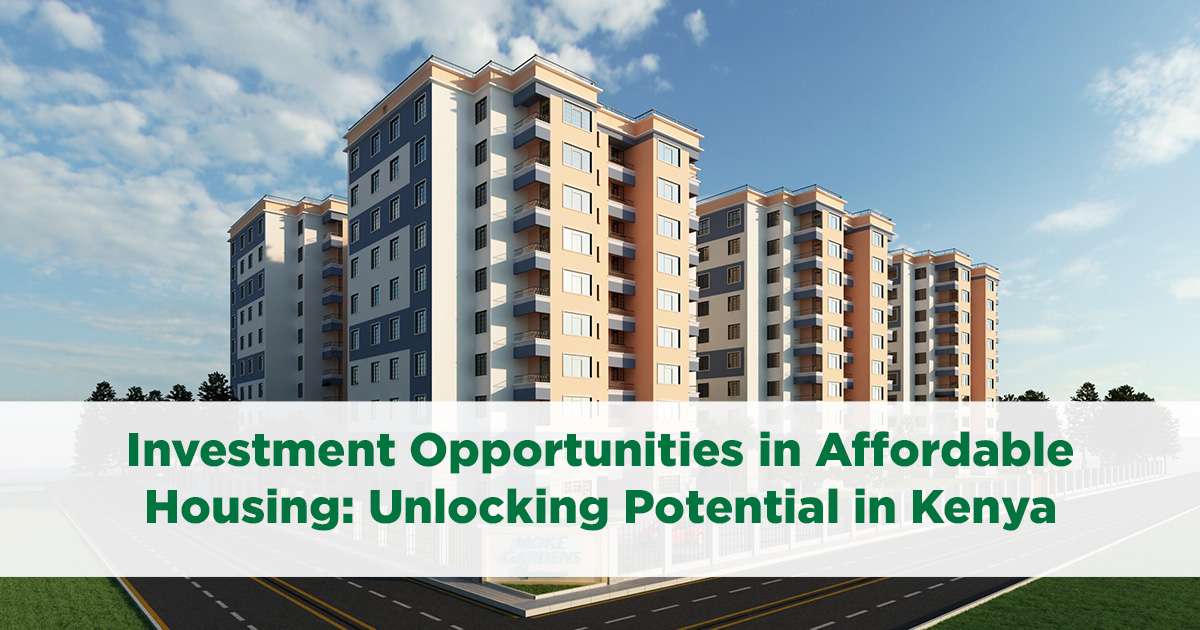
Investing in Kenya's Affordable Housing Projects: What You Need to Know
 Affordable Housing Investment in Kenya" class="w-full h-auto rounded-lg object-cover">
Affordable housing in Kenya is no longer operating purely as a social development agenda. It is increasingly becoming a structural investment system tied to urbanization, labor mobility, infrastructure expansion, and long-duration housing demand.
Many investors still misunderstand the segment because they analyze it using traditional luxury real estate logic.
Affordable housing behaves differently.
It is not driven primarily by prestige, speculative flipping, or ultra-high margins. Instead, it operates through volume economics, occupancy stability, recurring cash flow, and long-term absorption demand.
This distinction matters because it changes how capital should evaluate the sector.
The Real Opportunity Is Not Cheap Housing — It Is Demand Stability
The strongest investment characteristic in affordable housing is not low pricing.
It is persistent demand.
Luxury markets fluctuate heavily with economic cycles, credit conditions, and investor sentiment. Affordable housing demand behaves differently because housing remains a functional necessity before it becomes a lifestyle purchase.
This creates a structural floor beneath demand.
Even during economic slowdowns, households still require:
- Rental accommodation
- Transit-access housing
- Incremental ownership pathways
- Affordable monthly payment structures
As urban populations expand, affordable housing demand compounds naturally through demographic pressure rather than speculative excitement.
Why Affordable Housing Is Becoming a Capital System
Historically, affordable housing was viewed as a policy issue.
Now it is becoming a capital allocation category.
This transition is occurring because institutional investors increasingly recognize that housing shortages create recurring market inefficiencies that can be monetized through scaled development systems.
The logic is straightforward:
| Traditional Real Estate Logic | Affordable Housing Logic |
|---|---|
| High margin per unit | High absorption velocity |
| Luxury-driven demand | Necessity-driven demand |
| Speculative appreciation | Occupancy continuity |
| Small buyer pool | Mass-market participation |
The affordable housing market scales through consistency rather than exclusivity.
The Behavioral Economics Behind Affordable Housing Demand
One of the least discussed aspects of affordable housing is behavioral predictability.
Lower- and middle-income households tend to prioritize housing stability because relocation costs are economically disruptive.
This creates several investment advantages:
- Longer tenant retention periods
- Lower voluntary vacancy rates
- Stable recurring occupancy
- Predictable monthly payment behavior
In many ways, affordable housing behaves more like utility infrastructure than speculative property.
That changes how investors should think about risk.
A New Investment Idea: Layered Affordable Housing Ecosystems
Most affordable housing projects focus almost entirely on unit delivery.
But there may be a more scalable model.
Proposed Concept: Layered Housing Ecosystems
Instead of building isolated residential blocks, developers could design self-reinforcing housing ecosystems where housing demand internally supports surrounding economic activity.
The model would combine:
- Residential housing units
- Micro-retail spaces
- Transport connectivity nodes
- Community service hubs
- Flexible workspaces
The idea is simple:
Housing demand creates economic concentration. Economic concentration then reinforces housing demand.
This creates a circular demand system rather than a static housing project.
Tested Conceptual Hypothesis
Hypothesis: Affordable housing projects that integrate small-scale economic infrastructure within walking distance will experience stronger occupancy stability and higher long-term value retention than isolated housing-only developments.
Conceptual Testing Logic
Scenario A — Housing-Only Development
- Residents depend heavily on external systems
- Transport costs remain high
- Economic activity leaks outward
- Community attachment remains weaker
Scenario B — Layered Housing Ecosystem
- Daily economic activity remains localized
- Convenience improves occupancy desirability
- Micro-businesses emerge naturally
- Residential retention strengthens
The logical conclusion suggests that affordable housing becomes more economically durable when housing and localized utility systems evolve together.
Why Investors Are Increasingly Interested
Affordable housing creates a different investment profile from luxury real estate.
Instead of relying entirely on appreciation, the sector can produce:
- Recurring rental income
- Large-scale absorption demand
- Long-duration occupancy
- Cash flow predictability
For long-term investors, this matters more than speculative excitement.
The investment thesis becomes:
Can recurring housing demand create stable cash flow systems over extended time horizons?
In many urbanizing regions of Kenya, the answer increasingly appears to be yes.
Where the Sector Could Quietly Fail
Affordable housing is often presented as automatically safe because demand is high.
That assumption can be dangerous.
Several structural weaknesses can undermine projects:
| Risk Area | Potential Impact |
|---|---|
| Poor location selection | Weak long-term occupancy |
| Overreliance on subsidies | Funding instability |
| Weak infrastructure support | Resident dissatisfaction |
| Low-quality construction | Accelerated asset deterioration |
| Transport disconnection | Reduced economic viability |
Affordable housing works best when integrated into functioning urban systems rather than isolated construction projects.
The Financing Shift Most People Are Missing
The future of affordable housing may not be dominated by traditional mortgages.
Instead, the sector appears to be moving toward hybrid financing structures:
- Rent-to-own systems
- SACCO-backed ownership
- Incremental financing
- Employer-supported housing
- Subscription-style housing models
This matters because financing architecture determines market accessibility.
The most scalable housing systems are often the ones that align with real household cash flow behavior.
Affordable Housing Is Quietly Reshaping Urban Geography
As housing demand pushes outward from expensive urban cores, affordable housing projects are beginning to redefine city expansion patterns.
Entire satellite communities are emerging around:
- Transport corridors
- Industrial zones
- Bypasses
- Employment clusters
Affordable housing is no longer simply following urban growth.
It is increasingly creating new urban growth zones.
Final Conclusion
Affordable housing in Kenya is evolving into something much larger than a policy initiative.
It is becoming a long-duration economic system tied to labor mobility, urbanization, infrastructure expansion, and recurring demographic demand.
The biggest investment insight is this:
The sector’s strength does not come from high margins per unit. It comes from the structural persistence of housing demand itself.
The proposed layered housing ecosystem model extends this idea further by integrating housing with localized economic activity, creating more durable occupancy systems over time.
For investors, the opportunity is not simply building houses.
It is designing systems where housing demand continuously reinforces economic participation.
Frequently Asked Questions
1. Why is affordable housing attracting investors in Kenya?
Because housing demand remains structurally persistent due to urbanization, demographic expansion, and limited ownership accessibility.
2. Is affordable housing purely a government-driven sector?
No. While policy support matters, private developers and institutional investors increasingly view affordable housing as a scalable recurring-income asset class.
3. What is a layered housing ecosystem?
It is a proposed affordable housing model that integrates residential housing with localized economic infrastructure such as retail, services, and transport connectivity.
4. What is the biggest risk in affordable housing investment?
Poor system integration. Housing projects disconnected from transport, employment, and utility systems may struggle long term despite initial demand.
5. Why does affordable housing behave differently from luxury real estate?
Because affordable housing demand is primarily necessity-driven rather than prestige-driven, creating more stable occupancy behavior.
Disclaimer: This article is for informational purposes only and does not constitute investment, financial, or legal advice.
Filed under
Related Reading