Investment
Diani and Watamu Land have appreciated by 400% since 2020
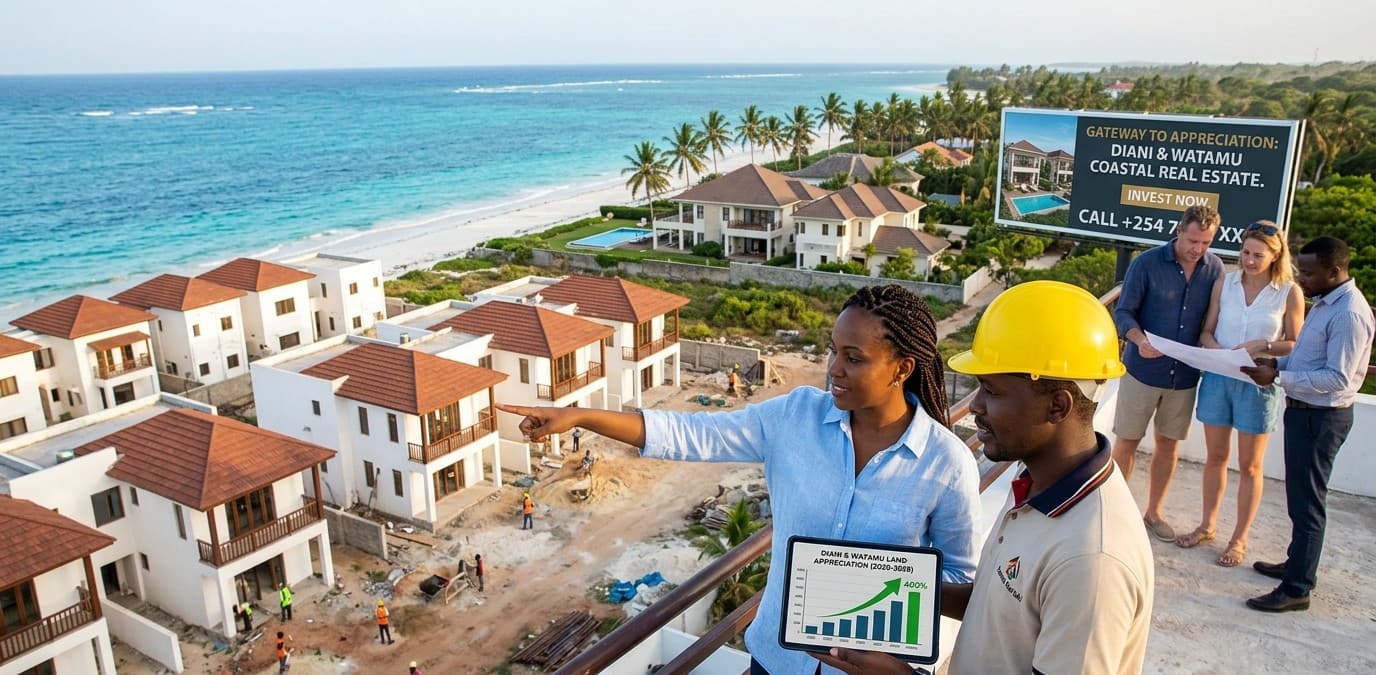
Diani and Watamu Land have appreciated by 400% since 2020
Diani and Watamu Land have appreciated by 400% since 2020 Kenya's 536-kilometer coastline. Demand for Land in Watamu and Diani is increasing. There is also an increase in land prices in Mombasa hotspots.
I have been getting calls left, right, and center from developers in Mombasa who require urgent capital to develop townhouses and mansions in Watamu, as they see high demand to live in that region.
Towns along the route from Lamu to Diani have consistently had their land prices monitored and analyzed by researchers. Sakina Hassanali, a Kenyan investor, put it bluntly: "I have been interested in acquiring property on the coast, either a house (not an apartment) or land, and could do with some pointers. This would be for rental and personal holiday use. Possibly a retirement spot when that time comes. Which areas are best - north or south coast? Is it more economical to build my own house or buy an already-built house? Better to buy in those gated communities with 50*100 plots or one that stands by itself? And anything else that I’m missing."
The HassConsult Index Q1 2026
The Q1 2026 HassConsult Index released the Mombasa Land Price Index. Towns along the route from Lamu to Diani have consistently had their land prices monitored and analyzed by researchers.
Sakina Hassanali, a Kenyan investor, put it bluntly: "I have been interested in acquiring property on the coast, either a house (not apartment) or land, and could do with some pointers. This would be for rental and personal holiday use. Possibly a retirement spot when that time comes.
- Which areas are best - north or south coast?
- Is it more economical to build myself or buy an already-built house?
- Better to buy in those gated communities with 50*100 plots or one that stands by itself? And anything else that I’m missing."
What the Data Shows
The HassConsult Coastal Land Price Index tracks 12 towns. Here is what happened between 2020 and 2025.
| Town | Appreciation | Price Per Acre (KSh M) | What We Are Seeing |
|---|---|---|---|
| Diani | ~200% | ~15–20 | Beach frontage, high demand |
| Watamu | ~200% | ~12–18 | Marine park, natural beauty |
| Bamburi | +56.6% | ~8–14 | Resort developments |
| Kilifi / Kikambala | ~40% | ~5–10 | Expanding resorts |
| Vipingo / Malindi | ~25% | ~4–8 | Lower aesthetics |
| Nyali | Slowing | 114 | Mature market |
Source: HassConsult Coastal Land Price Index Q4 2025.
Retail investors are more interested in buying land where there is already existing demand. As the law of demand in economics suggests, the higher the demand, the higher the price, thus the more attractive it is to investors.
Beachfront properties are selling at a 20% rate above the previous year.
Who is buying land in Watamu today?
Three types of capital are moving in.
Diaspora Investors.
Kenyans in the UK and the US are now acquiring land in Watamu and Diani (Mombasa’s CASH COW). Kenya and East Africa have the highest return on Investment growth in the world, which attracts developers from China and the EU to deploy capital into the real estate sector in Mombasa.
European REITs.
UK and German retail buyers are targeting the Watamu and Diani areas as second homes. This is consistent with the returns from Apartments in Kilimani, where an investor is likely to invest in Kenya and get a 10% return per annum, rather than their home country, where the highest asset class investment only fain 6% at best.
Domestic HNWI and Financial Institutions.
Family offices, pension funds, and UHNWI are increasingly deploying capital into single-family coastal homes across Watamu and Diani.
What was once viewed as a leisure purchase is now being repositioned as an income-producing lifestyle asset. Short-term rentals and holiday homes are becoming institutionalized as investors seek yield, land appreciation, and scarcity-driven coastal exposure.
According to Knight Frank, Kenya’s Coastal Real Estate is now being described as a “high-demand area” and is considered prime land(real estate). Beachfront real estate assets in locations such as Diani and Watamu are recording strong transaction activity and a rising investor demand. Knight Frank further suggests that buyers are prioritizing real estate assets that are“direct tamarced road access, outdoor scenery, the ability to build luxury holiday homes with neighboring luxury/modern homes with modern fixtures and finishes, Hospitality residence that attract tourists, and an investment into a single strategic asset that produces cashflow(income-producing asset).”
Meanwhile, data from the Kenya National Bureau of Statistics (KNBS) and tourism market updates show that coastal beach destinations account for the highest room-booking levels in Kenya, reflecting the continued growth of domestic tourism and short-term let demand.
The coastal real estate market is no longer trading on lifestyle appeal; rather, it is increasingly trading on cash flow, yield, demand, and land banking.
Grounded FAQ Summary (Based on Blue Economy Coastal Context + Real Estate Intelligence Logic)
1. What “grounded insight” actually means in coastal markets
In coastal East Africa, credible real estate insight is meaningful only when anchored in observable coastal system dynamics, not in abstract commentary.
From a blue economy perspective, coastal value formation is influenced by:
- coastal urbanization pressure (settlement concentration along shorelines)
- infrastructure unevenness (water, sanitation, transport systems)
- environmental exposure (erosion, flooding, sea-level risk)
- tourism-linked economic activity clusters
In real estate terms, this translates into three evidence layers:
A. Market transaction signals (property layer)
Grounded insight reflects actual or observable market activity, such as:
- differentiated pricing between serviced and unserviced coastal land
- faster absorption of titled, infrastructure-supported parcels
- higher turnover in professionally managed coastal rental assets
Even when exact figures are unavailable, credible framing is:
“Based on observable listings and recent transactional activity along key coastal corridors…”
This anchors the analysis in market behavior rather than theory.
B. Coastal economic behavior (blue economy layer)
Blue economy dynamics shape real estate indirectly through:
- tourism concentration in specific coastal nodes
- expansion of short-stay accommodation ecosystems
- conversion of residential assets into hybrid hospitality units
- dependency on infrastructure reliability (water, access, waste systems)
This means demand for coastal property is not purely aesthetic — it is tied to the functional economic use of the coastline.
C. Institutional and environmental constraints (system layer)
From a blue economy and coastal planning perspective, real estate value is constrained or enhanced by:
- coastal zoning and planning regulation enforcement
- environmental setback requirements and erosion risk zones
- infrastructure investment levels in coastal municipalities
- long-term climate exposure and resilience planning
These factors influence long-term asset durability and insurability, even if not immediately reflected in pricing.
Related Articles
- Kenya Land Ownership: The Legal Framework
- Nairobi Satellite Towns: Slowing Appreciation
- Diaspora Investment: Verification and Exit
Disclaimer: This article is for informational purposes only and does not constitute investment advice. All land investment decisions should be made with independent professional guidance.
Related Reading