Private Wealth & Capital Strategy
Legacy Wealth and Nairobi’s Institutional Property Transition: Why Old Money Capital Is Quietly Repositioning

Legacy Wealth and Nairobi’s Institutional Property Transition: Why Old Money Capital Is Quietly Repositioning

Across Nairobi’s upper-tier commercial property market, a quieter transition is unfolding beneath the noise of inflation headlines, political volatility, and speculative social media investment culture. East Africa’s wealthiest families are increasingly repositioning toward institutional-grade real estate structures focused less on rapid appreciation and more on capital preservation, income durability, and generational continuity.
The shift matters because old money rarely allocates capital reactively. Multi-generational wealth tends to move slowly, strategically, and structurally. When legacy capital begins prioritising logistics corridors, mixed-use assets, prime office repositioning, and infrastructure-linked commercial property, it often signals a broader transition in how sophisticated investors perceive long-duration economic risk.
The Psychology of Legacy Capital Is Different
Speculative wealth seeks acceleration. Legacy wealth seeks survival.
This distinction increasingly defines the divergence between short-cycle retail investors and institutional family office strategies emerging across Nairobi and the broader East African region. Wealthy families are becoming less focused on aggressive short-term returns and more concerned with protecting purchasing power across decades.
Inflation volatility, currency depreciation pressure, geopolitical uncertainty, and changing tax environments have collectively reinforced the importance of hard assets capable of preserving long-term real value.
Commercial property — particularly strategically positioned income-producing assets — increasingly fits that mandate.
Nairobi Is Quietly Institutionalising
Nairobi’s commercial property market historically evolved through entrepreneurial development cycles rather than deeply institutional capital structures. That environment created significant growth opportunities, but also pricing inefficiencies, fragmented governance standards, and inconsistent operational quality.
The market is now maturing.
Institutional capital increasingly prioritises professionally managed buildings, infrastructure connectivity, energy resilience, tenant covenant quality, and operational sustainability rather than purely location prestige.
Prime commercial corridors around Upper Hill, Westlands, Gigiri, Karen, Kilimani, and emerging logistics zones along Mombasa Road and Nairobi Expressway infrastructure are increasingly attracting family office and cross-border private capital seeking long-duration positioning.
The New Wealth Priority Is Durability
During previous cycles, many investors prioritised speculative land banking and appreciation assumptions tied primarily to urban expansion narratives.
That thesis is evolving.
Sophisticated allocators increasingly focus on durability metrics including infrastructure access, transport resilience, tenant retention probability, operating efficiency, security, and long-term demographic demand.
This is partly why logistics-linked industrial assets and mixed-use environments are increasingly outperforming weaker secondary commercial inventory.
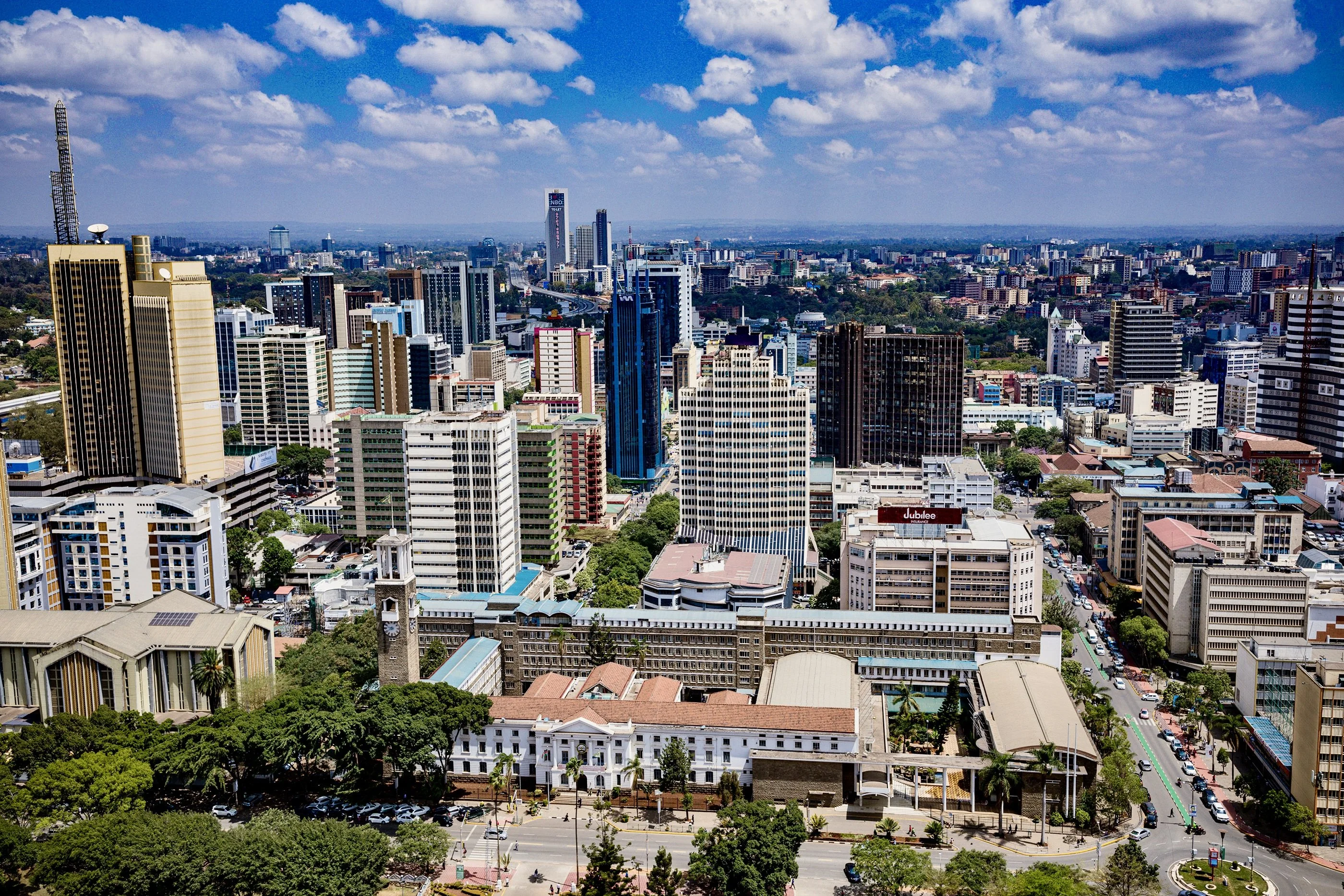
Wealth preservation is fundamentally about reducing fragility. Assets dependent entirely on speculative appreciation tend to perform poorly during inflationary or liquidity-constrained periods. Income-producing real estate with operational resilience behaves differently.
Why Family Offices Are Looking Beyond Residential Speculation
Residential property remains important within East African wealth portfolios, but commercial property increasingly provides stronger alignment with institutional objectives.
Prime logistics facilities, mixed-use developments, healthcare-linked real estate, warehousing infrastructure, and institutional office assets often generate more stable income visibility and stronger tenant durability during periods of macroeconomic volatility.
This is particularly relevant as Nairobi evolves into a regional business and logistics hub serving broader East African trade corridors.
Long-duration wealth strategies increasingly favour assets connected to economic infrastructure rather than purely consumption-driven speculation.
The Global Wealth Playbook Is Influencing East Africa
Many East African family offices are becoming increasingly global in structure and mindset.
Exposure to Dubai, London, Singapore, Switzerland, and North American investment frameworks is reshaping local allocation behaviour. Wealthy investors are adopting more sophisticated approaches toward governance, risk management, portfolio diversification, and institutional underwriting standards.
As a result, Nairobi’s best commercial assets are increasingly evaluated not merely against local comparables, but against broader international capital preservation frameworks.
That transition may gradually compress quality premiums for prime institutional property while widening the gap between resilient assets and weaker secondary stock.
Where the Risks Still Sit
Nairobi’s commercial property transition remains incomplete.
Infrastructure inconsistency, political uncertainty, currency volatility, and uneven planning standards continue creating operational risk across several segments of the market. Secondary office oversupply and weaker retail positioning also remain important considerations.
Wealth preservation strategies therefore increasingly depend on asset selection quality rather than broad market exposure alone.
Institutional capital tends to consolidate toward fewer, higher-quality assets during uncertain cycles. This frequently widens pricing dispersion across the market.
Portfolio Strategy Takeaway
The next phase of Nairobi’s commercial property market may be defined less by speculative momentum and more by institutionalisation, operational resilience, and infrastructure-linked wealth preservation.
For sophisticated investors and family offices, the objective is increasingly clear: preserve purchasing power, protect generational capital, and position portfolios around durable long-duration economic infrastructure.
In that environment, institutional-grade commercial property becomes more than a real estate allocation. It becomes a legacy strategy.
Frequently Asked Questions
Why are wealthy Kenyan families reallocating toward commercial property?
Commercial property offers long-duration income stability, inflation-linked rental growth, and stronger capital preservation characteristics compared to speculative investment assets.
What defines institutional-grade property in Nairobi?
Institutional-grade property typically includes prime office assets, logistics facilities, mixed-use developments, and strategically positioned commercial buildings with strong tenant durability and infrastructure connectivity.
Why does old money prioritise wealth preservation over speculation?
Multi-generational wealth strategies focus primarily on capital durability, income continuity, governance structures, and downside protection rather than short-term market timing.
How is Nairobi evolving as a private capital destination?
Nairobi continues attracting regional family office and institutional capital due to demographic growth, East African trade integration, and increasing demand for modern logistics and mixed-use infrastructure.
Disclaimer: This article is for informational purposes only and does not constitute investment advice. All commercial real estate acquisition decisions should be made with independent professional guidance. Murivest Realty Group Ltd is an independent real estate advisory firm. We do not act as a licensed investment advisor and do not offer regulated financial products or collective investment schemes. We do not pool capital from multiple investors. All advisory engagements are mandate-based, subject to formal documentation, comprehensive KYC/AML verification, and explicit scope definition. No investment decisions should be made based on information contained in our materials without independent verification, professional legal counsel, and comprehensive due diligence. Past advisory outcomes do not guarantee future results. All investments carry inherent risks, including potential capital loss.
Filed under
Related Reading
Murivest Community
Investor Discussion
Discuss investment opportunities, market trends, lease activity, financing, and underwriting with the Murivest community.
Join the Discussion
Share investment insights, market commentary, or leasing observations.
Professional discussion only. All comments are moderated.
Loading…
No discussion yet — be the first to contribute an insight.
Ask Murivest Research
Submit a Research Question
Questions on underwriting, leasing, market fundamentals, or capital structures are answered by the Murivest desk.
Murivest Research