Market Intelligence
Global Capital Allocation: Why Dubai's Real Estate Market Remains Highly Resilient
Global Capital Allocation: Why Dubai's Real Estate Market Remains Highly Resilient
real estate investment landscape in 2026"
>
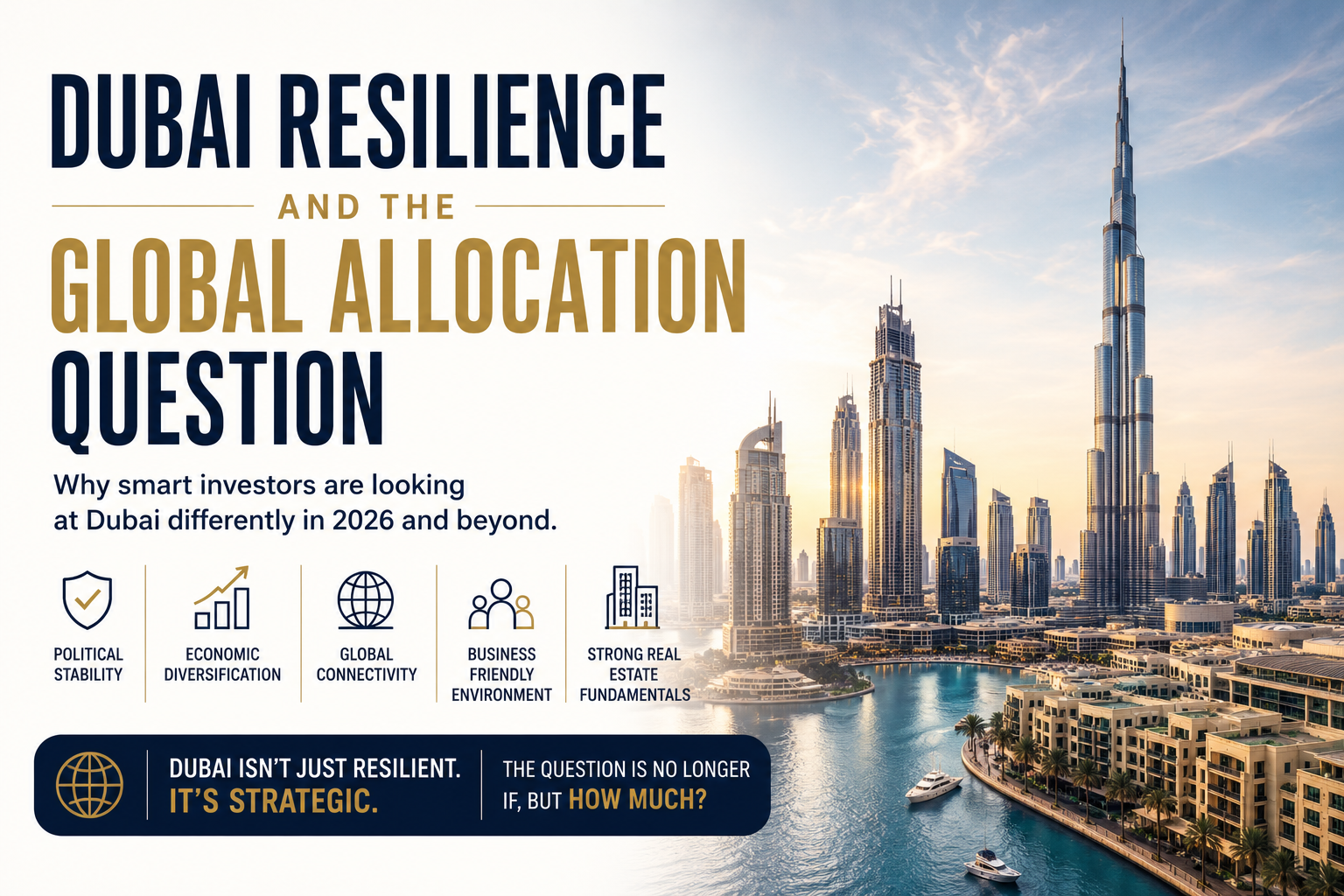
Dubai residential pricing has risen materially since the 2020 correction cycle, even as regional volatility and geopolitical uncertainty continue to dominate investor headlines. The disconnect matters. Markets driven primarily by leverage tend to deteriorate quickly when sentiment weakens. Dubai behaves differently. Roughly four-fifths of residential transactions remain equity-backed rather than mortgage-financed, creating a market structure that historically pauses during uncertainty instead of entering prolonged forced-liquidation cycles.
For GCC family offices and cross-border allocators, the question is no longer whether Dubai remains investable. The more relevant question is whether the emirate should now be viewed as a stabilizing core allocation within a broader international real estate strategy spanning London, selected US logistics corridors, and defensive European income assets.
The Market Is Pricing Structural Confidence, Not Short-Term Optimism
Dubai’s recovery trajectory following the pandemic remains one of the clearest examples of capital repricing under conditions of temporary dislocation. Transaction velocity accelerated sharply after 2020 as international investors re-entered the market ahead of broader global normalization. Prime residential values in several submarkets subsequently appreciated by more than 30% from cycle lows.
But the more important observation is not the recovery itself. It is the composition of capital driving it.
Indian HNWIs, UK expatriate wealth, Russian post-2022 capital migration, and regional family offices have collectively reinforced Dubai’s position as a capital preservation jurisdiction rather than merely a speculative growth market. That distinction changes pricing behavior. Capital preservation buyers hold through volatility. Speculative buyers exit at the first sign of stress.
In districts such as DIFC, Downtown Dubai, and Dubai Marina, the bid profile increasingly resembles institutional gateway markets rather than purely cyclical emerging-market real estate. Yields remain comparatively attractive against London and major European cities, yet the pricing spread has narrowed meaningfully since 2021.
Why is Dubai Real Estate the Ultimate Safe Haven for Global Asset Allocation?
Credit expansion creates speed during upcycles. It also creates fragility during downturns.
Dubai’s residential market structure remains relatively insulated from the kind of forced deleveraging that historically prolonged corrections in heavily financed Western markets. Non-mortgaged transactions continue to dominate volumes across multiple residential segments, reducing systemic refinancing pressure during periods of weaker sentiment.
This does not eliminate downside risk. Pricing corrections can still occur, particularly in oversupplied submarkets or speculative off-plan segments. Yet structurally, equity-backed markets tend to experience liquidity slowdowns before they experience distress pricing. That difference matters enormously for investors underwriting seven- to ten-year hold periods.
Consider the contrast with several developed office markets currently facing debt maturity pressure. In parts of the United States, refinancing risk alone is driving asset repricing. Dubai’s residential sector is not facing the same structural leverage exposure.
D33 and the Institutionalization of Dubai’s Growth Agenda
Markets rarely sustain long-duration capital inflows without policy continuity. Dubai understands this. The emirate’s long-term positioning is increasingly supported by institutional frameworks designed to reinforce global capital confidence rather than short-cycle speculation.
The Dubai Economic Agenda D33 and the Real Estate Sector Strategy 2033 collectively signal an attempt to formalize Dubai’s transition from opportunistic growth market into a globally integrated capital platform. The policy direction emphasizes transparency, transaction efficiency, infrastructure expansion, foreign participation, and broader GDP contribution from real estate-linked sectors.
Investors often underestimate the importance of political consistency in underwriting long-duration property exposure. Stable regulatory signaling compresses perceived risk premiums. In practice, that means capital accepts lower yields when policy continuity appears credible.
This partly explains why Dubai logistics and prime residential yields have compressed materially relative to historical norms over the past several years.
The More Important Story Is Geographic Diversification
Concentration risk remains the defining weakness of many regional portfolios.
GCC investors have historically allocated heavily toward domestic or regionally familiar markets. That strategy generated substantial gains during commodity expansion cycles, but it also created vulnerability to regional liquidity shocks, political concentration, and currency exposure tied indirectly to energy pricing.
Institutional portfolios increasingly operate differently. Family offices and sovereign allocators now treat Dubai as one component inside a broader cross-border framework rather than as a standalone thesis.
 commercial real estate allocation strategy across Dubai London and North America"
>
commercial real estate allocation strategy across Dubai London and North America"
>
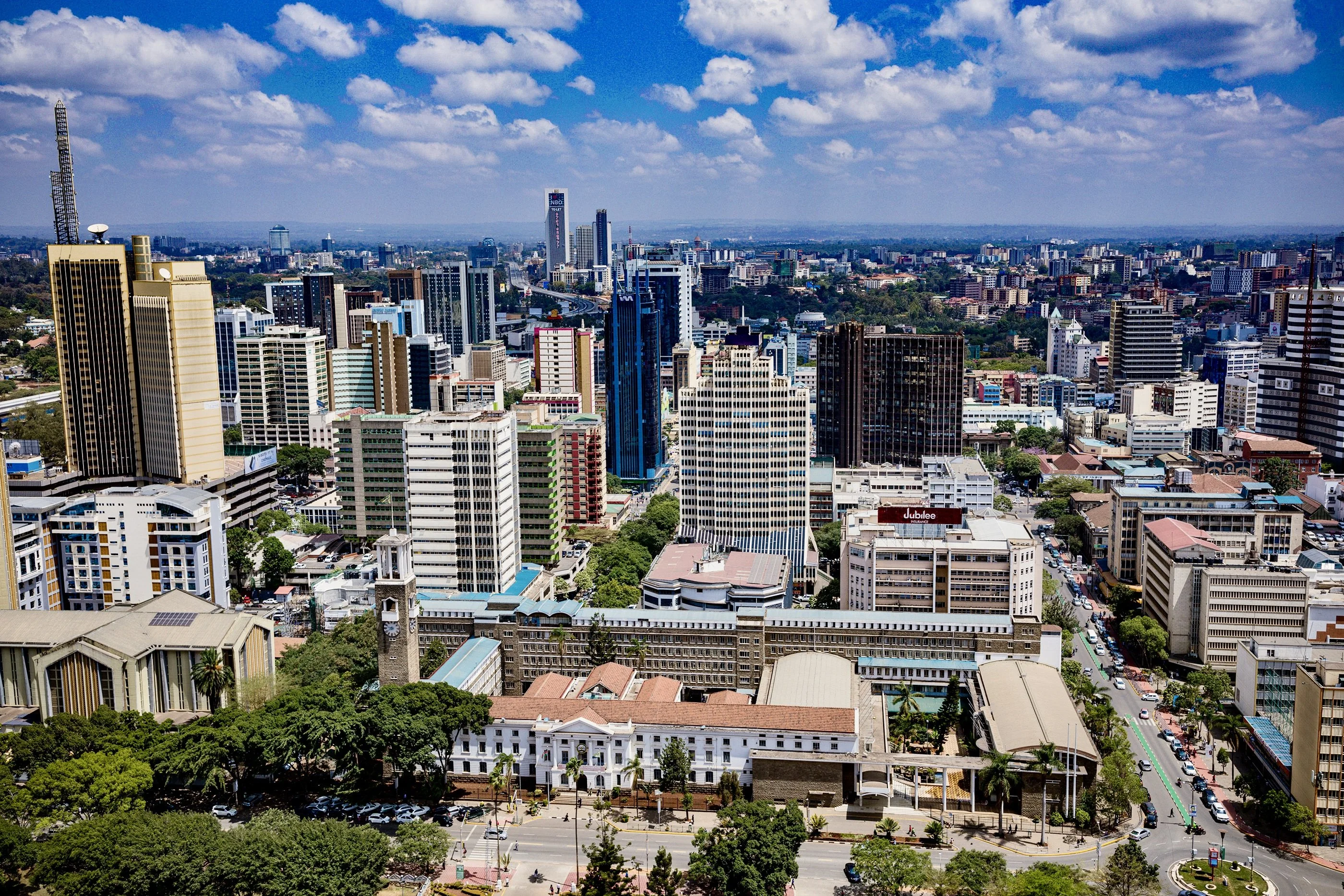
London remains attractive for legal transparency and defensive wealth preservation. Selected US industrial corridors continue benefiting from logistics demand and supply-chain restructuring. Segments of Western Europe offer income durability and institutional liquidity depth. Dubai sits between these worlds — higher yielding than most mature gateway markets, but increasingly more institutional than traditional emerging-market peers.
The allocation logic is structural. Different jurisdictions operate on different cycles. Currency exposure varies. Interest-rate sensitivity differs. Regulatory risk behaves differently across regions. Diversification is not simply geographic. It is cyclical, monetary, political, and liquidity-based.
Where the Risks Still Sit
None of this implies Dubai is immune to correction risk.
Supply expansion remains aggressive in selected residential segments. If global liquidity tightens materially or international migration slows, pricing momentum could moderate. Luxury inventory expansion also introduces absorption risk, particularly if speculative capital becomes overly concentrated in the upper end of the market.
Currency dynamics matter as well. GCC investors allocating internationally must increasingly evaluate not just local asset performance, but FX-adjusted returns across USD, GBP, EUR, and regional currency exposures.
There is also a broader geopolitical consideration. Capital inflows into Dubai have partially benefited from instability elsewhere. If competing jurisdictions stabilize while Dubai pricing continues compressing, relative value spreads may narrow faster than investors expect.
That said, markets do not require perfection to remain investable. They require asymmetry. Dubai’s appeal continues to rest on its ability to combine liquidity, tax efficiency, global connectivity, and comparatively strong yields within a politically stable framework.
Portfolio Strategy Takeaway
Dubai’s real estate market is no longer behaving like a purely cyclical Gulf growth story. The institutionalization of capital flows, the dominance of equity-backed transactions, and long-duration government positioning strategies have altered the market’s risk profile materially over the past decade.
For sophisticated GCC investors, the strategic discussion should now shift from tactical timing toward portfolio architecture. Dubai increasingly functions best not as a standalone conviction trade, but as a resilient anchor allocation within a geographically diversified global real estate strategy.
Frequently Asked Questions
Why has Dubai property remained resilient during periods of uncertainty?
A large percentage of transactions remain equity-driven rather than mortgage-financed. This reduces forced selling pressure during downturns and creates a more stable pricing structure than heavily leveraged markets.
Which Dubai submarkets continue attracting institutional-quality capital?
DIFC, Downtown Dubai, Business Bay, and selected logistics corridors around Jebel Ali and Dubai South continue attracting international capital due to infrastructure quality, liquidity, and long-term demand drivers.
Why are GCC investors diversifying internationally?
Cross-border diversification reduces concentration risk, improves currency exposure management, and provides access to markets operating on different economic and interest-rate cycles.
What are the main risks facing Dubai real estate in 2026?
Key risks include supply expansion in luxury residential segments, slower global liquidity conditions, and narrowing yield spreads relative to competing international gateway markets.
Disclaimer: This article is for informational purposes only and does not constitute investment advice. All commercial real estate acquisition decisions should be made with independent professional guidance. Murivest Realty Group Ltd is an independent real estate advisory firm. We do not act as a licensed investment advisor and do not offer regulated financial products or collective investment schemes. We do not pool capital from multiple investors. All advisory engagements are mandate-based, subject to formal documentation, comprehensive KYC/AML verification, and explicit scope definition. No investment decisions should be made based on information contained in our materials without independent verification, professional legal counsel, and comprehensive due diligence. Past advisory outcomes do not guarantee future results. All investments carry inherent risks, including potential capital loss.
Filed under
Related Reading
Market Intelligence
Distressed Real Estate in Kenya: The Nakumatt Auction and the Anatomy of Secured Lending Recovery
22 min read
Market Intelligence
The Chiromo Disposition: Standard Chartered's Exit from Physical Banking and What It Signals for Westlands Commercial Property
18 min read
Market Intelligence
London Commercial Real Estate: Q2 2026 Market Intelligence for Institutional Investors
16 min read
Murivest Community
Investor Discussion
Discuss investment opportunities, market trends, lease activity, financing, and underwriting with the Murivest community.
Join the Discussion
Share investment insights, market commentary, or leasing observations.
Professional discussion only. All comments are moderated.
Loading…
No discussion yet — be the first to contribute an insight.
Ask Murivest Research
Submit a Research Question
Questions on underwriting, leasing, market fundamentals, or capital structures are answered by the Murivest desk.
Murivest Research